Shocking Times
Welcome back to the farm folks. We are telling the shocking tale of cows with no boundaries and how we handled this! Sit back and enjoy the electrifying tale of regaining our barn from these bullying bovines! (Sorry, puns are my thing!)
Shortly after we brought home T-Bone and he got comfortable with his new environment, we noticed a trend that was annoying and messy. T-Bone, after being evicted from the stall and put on pasture began spending the nights in the open part of the barn, usually between the horse trailer and the mower. Everyone knows cows are a lot like chickens, everywhere they go they poop.
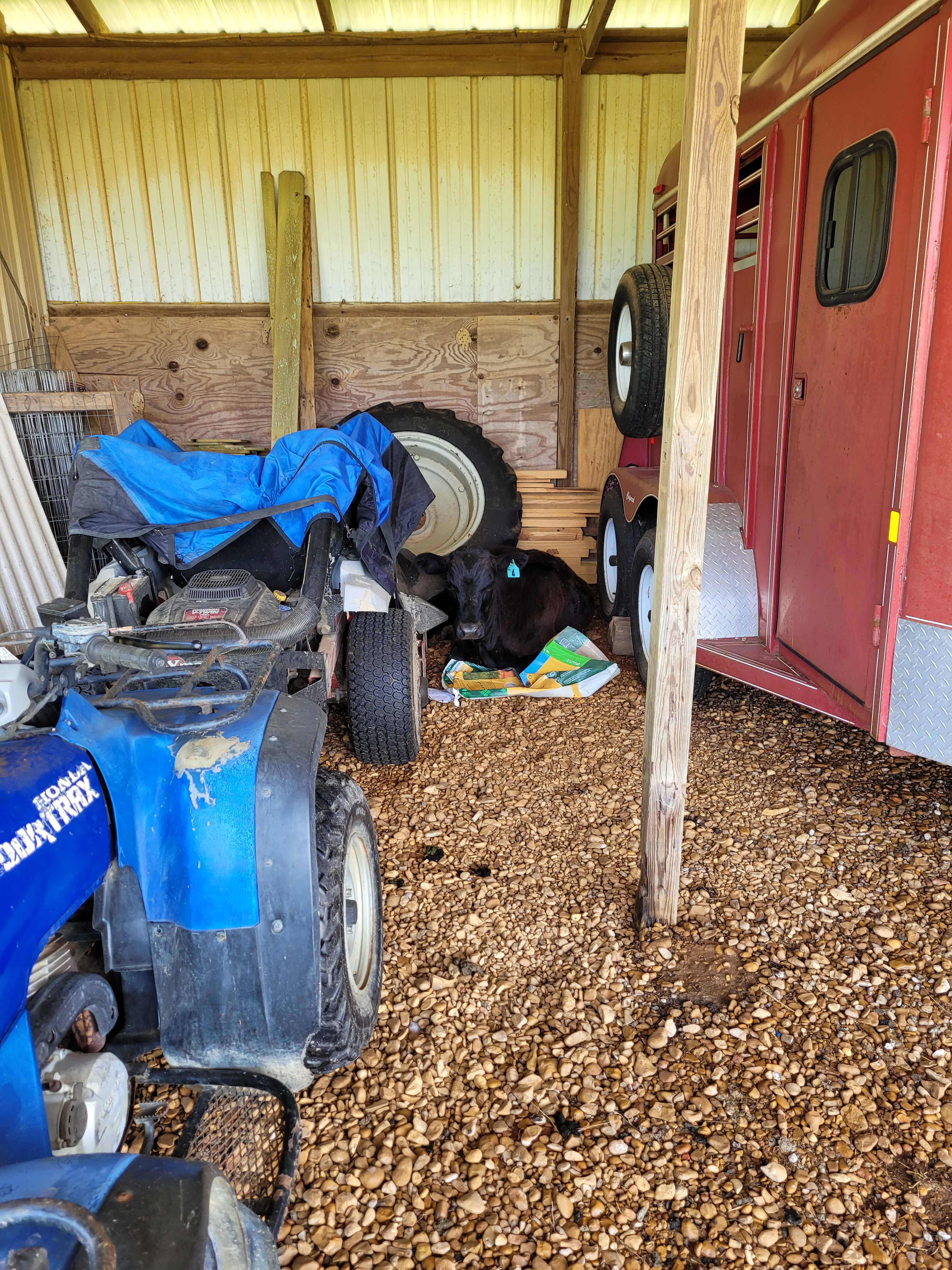
I didn’t think it was a problem until I went out one morning to get the mower fueled up and start cutting the grass. Cutting the grass is usually a process that takes about 2-3 hours with our 54-inch zero turn mower. I found a semi fresh T-Bone patty right on the foot deck of the mower and him standing between the mower and the trailer. Needless to say, the mower was washed before and after cutting grass that day.
As with many things on the farm, a need was noticed but a solution was not right at hand and no easy fix was noticed. We suffered though the patties in the barn and would sprinkle chicken feed on them to help them get cleaned up easier. Then Big Momma and Little Bit showed up. They took after T-Bone and also claimed dominion over the open bays of the barn. Now with three patty machines calling the place home it became an even more pressing issue.
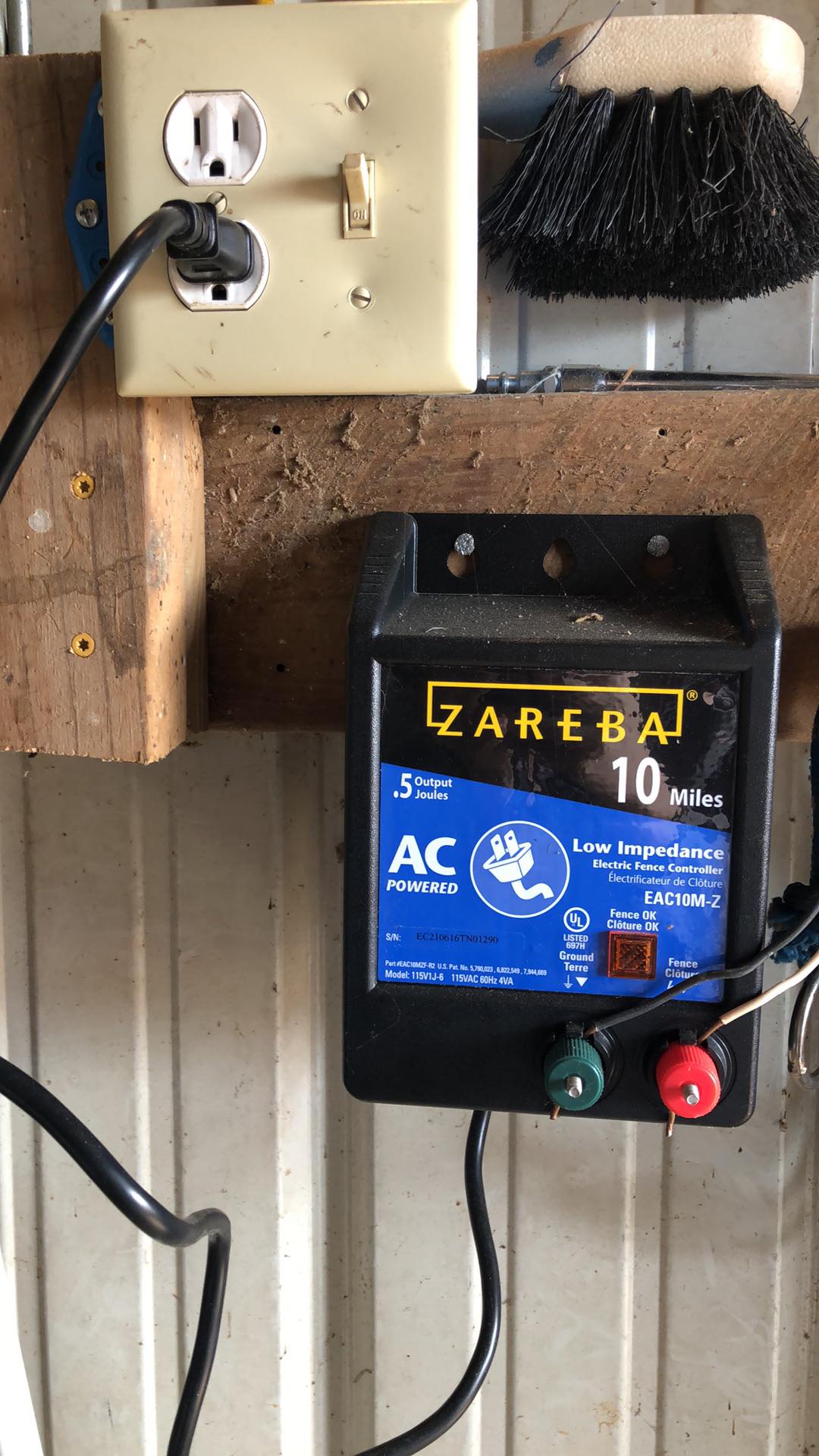
After much debate and discussion and shopping we settled on stringing electric wire around the barn from post to post and reclaiming the space from the poop mob. We settled on an AC electric fence charger that is rated for 10 miles of fencing and some high tensile metal wire.
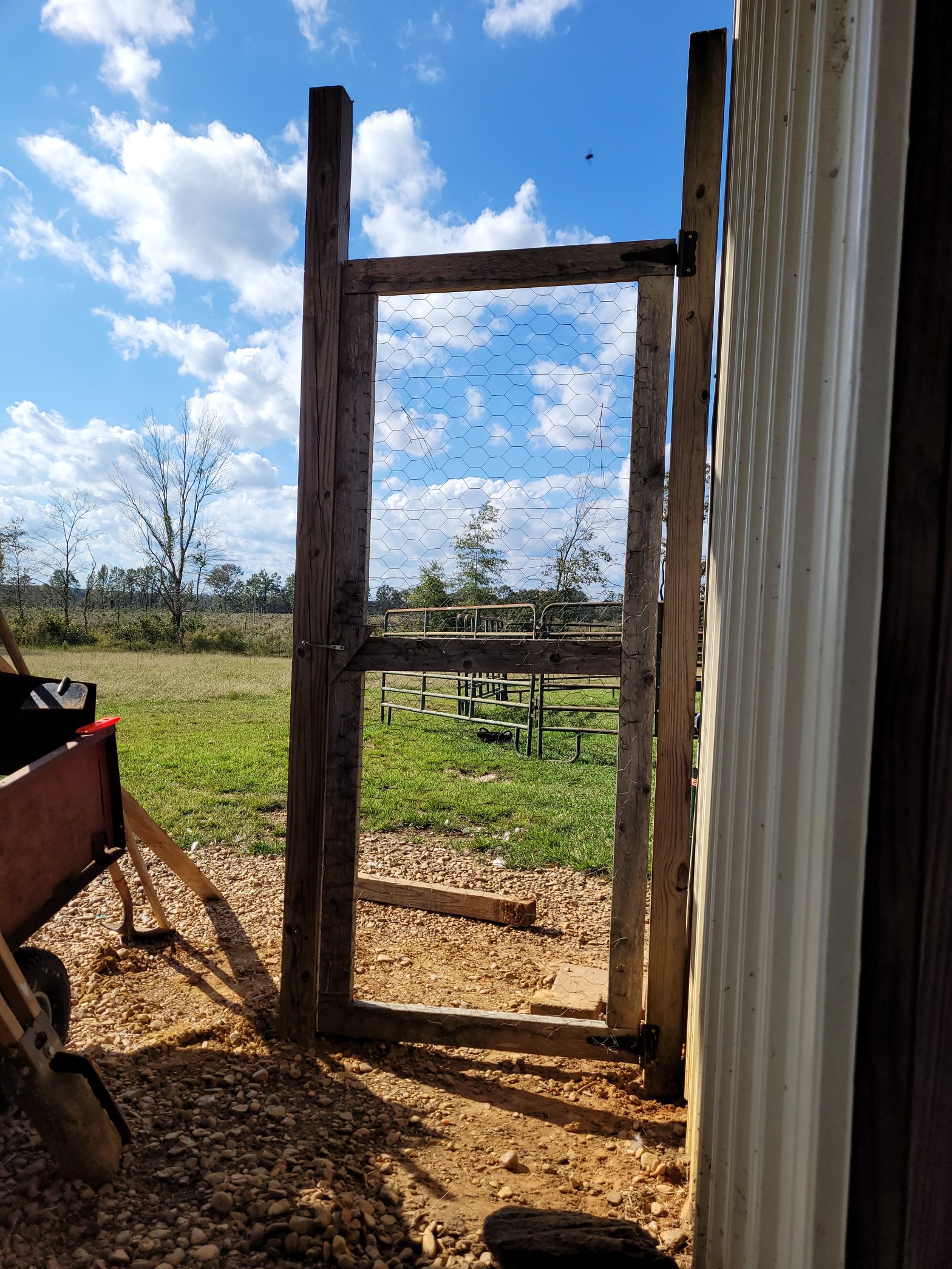
With that decision made we now needed a plan to implement that maintained easy of access to the tack room while still securing the open bays. What I came up with used old wood and an old door I made for the first iteration of the chicken coop and run.
I pulled up two ten foot four by four posts that used to designate the corners of the small chicken run we started all this with. I then dug down at the edge of the barn nearest the tack room and sunk one post directly against the tack room wall and the other I spaced over enough to place the door in between and allow it to operate. These posts were just set directly in the dirt as they are treated posts but also this isn’t a permanent solution. As move closer and closer to our goal of rotational grazing this will be less and less necessary and will probably be removed in time.
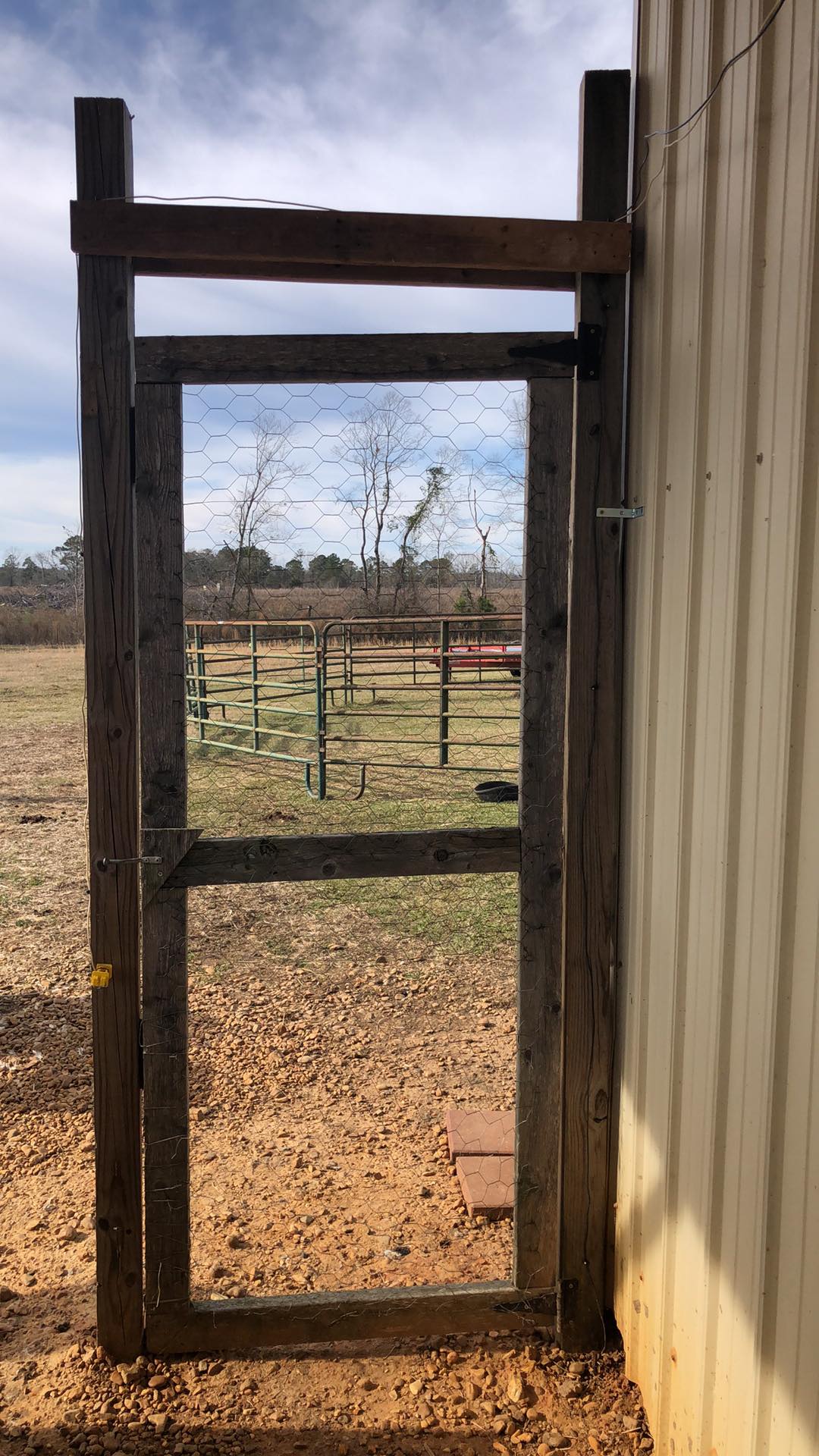
With the posts in place, I anchored one to the existing wall of the tack room and ran some boards across the top for a header of sorts to lock the remaining side in place. Now that the frame was solid, I mounted the door, which is a home made two by four lap jointed contraption that is strung with chicken wire. It is not pretty, nor is it really safe with screws poking out one side, but it is effective. I added a spring to auto close it which kind of works but the gravel sometimes gets in the way.
Having the entrance done allowed me to move on to mounting the charger and running the wires. The only plug in the tack room is located on an interior wall just past where the door stops when fully open. This presented some challenges on mounting and routing wires to power the fence that was yet to be put up.
The mounting was simple as screwing some screws through the mounting holes into the wall. Once it was mounted, the wires had to be routed to the area where the fence was to start and to the grounding rod. This sounds simple except it had to go through a wall/door to get there.
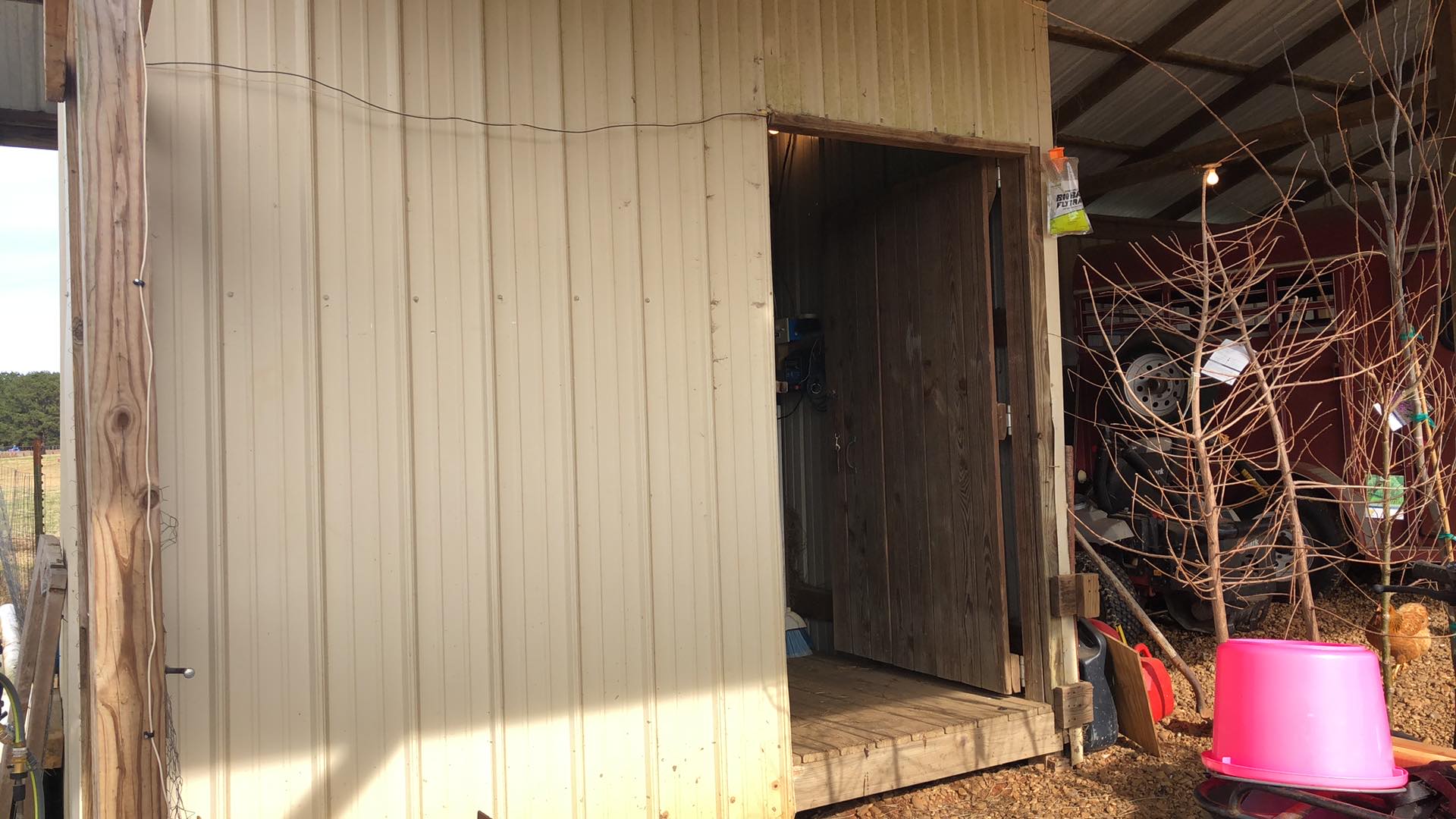
I took some 12/2 solid copper wire I had leftover from redoing the wiring to the barn and ran the power feed and ground wire along the wall, up the door facing, across the header, and they out of the tack room. Once out of the tack room I continued the wires along the wall to the doorway I had created. At that point I took the ground wire down and tied it to a piece of rebar that I drove almost sixteen inches into the ground. The power wire I continued across the header of the doorway and down to about thirty inches from the ground where I tied into the fence wire.
The fence itself, I ran around 30 inches high all the way around the barn on the posts for four of the five bays and terminated it at the corner of the stall, leaving the area in front of the stall open. In order to keep access to the bays fenced off I added these electric fence gate handles and created loops to hook onto transferring the electricity through the handle on to the next loop and so on and so forth to the end of the fence.
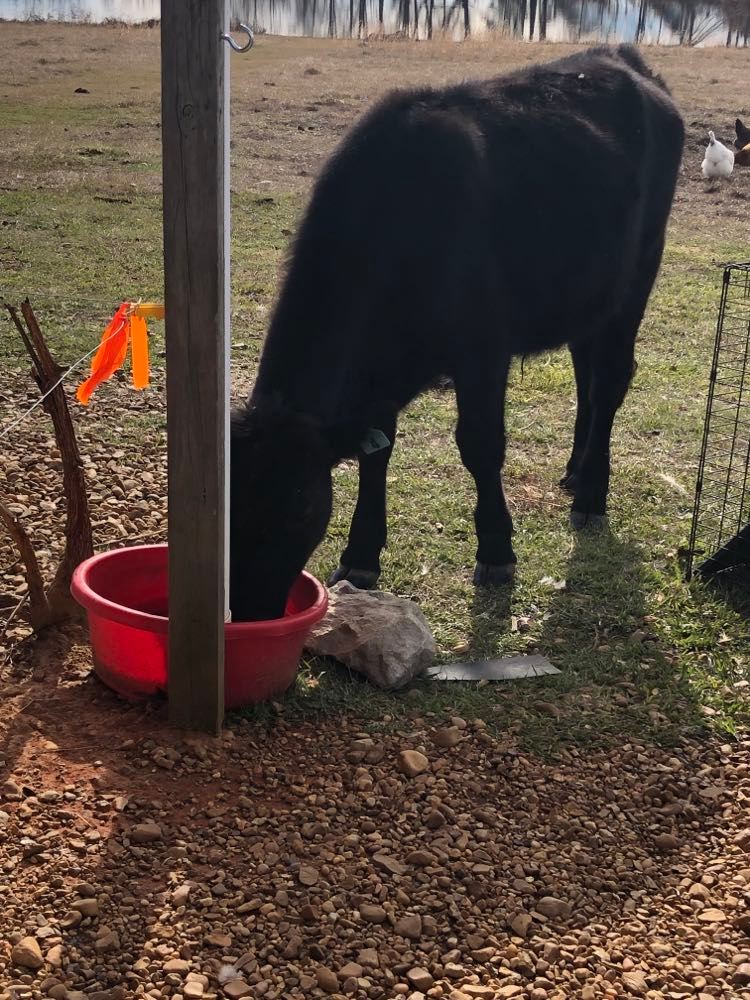
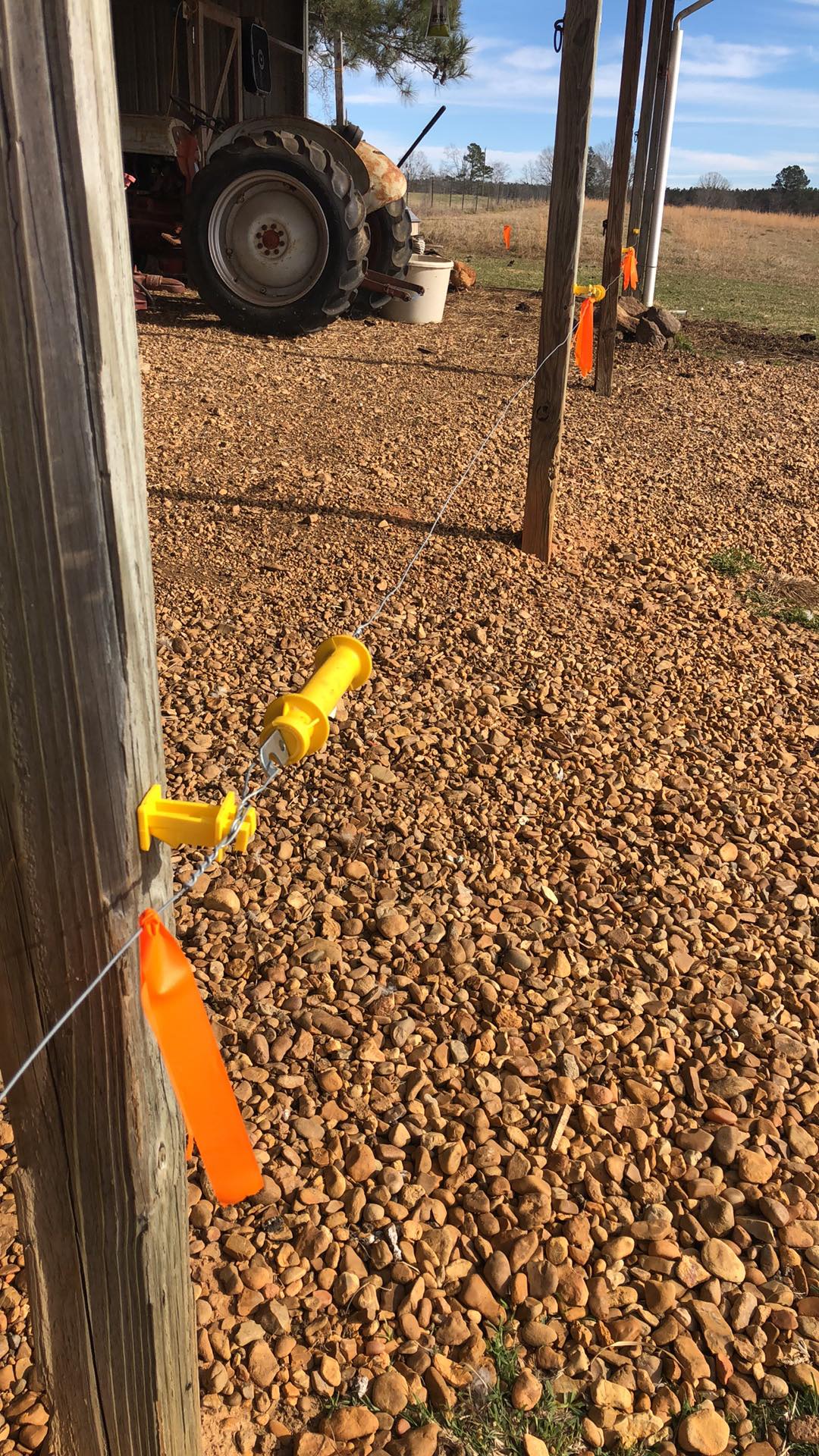
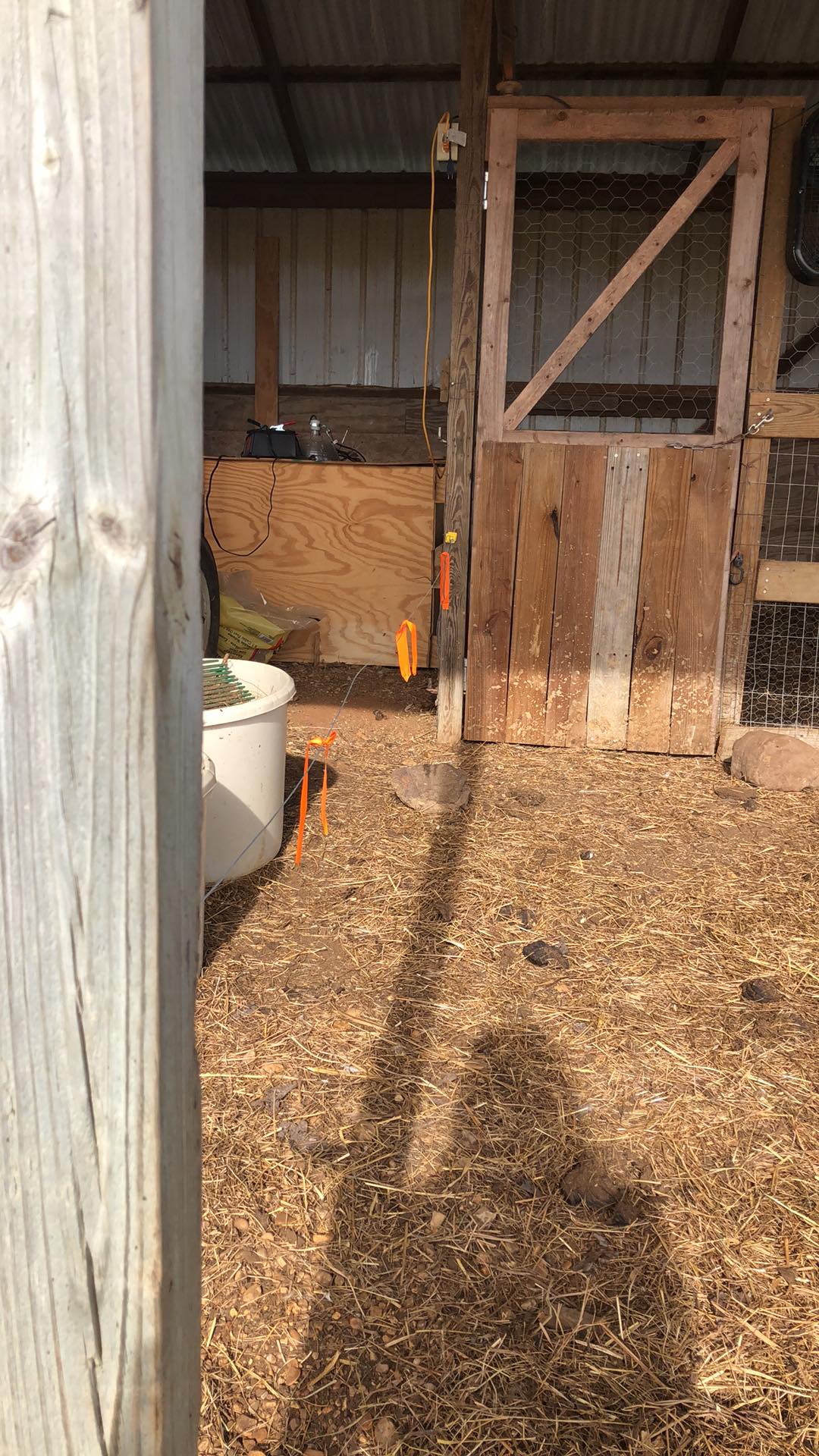
Once it was up and charged, we just had to wait for everyone to learn the new boundaries. We didn’t see the cows touch it, but we did see Peewee and Daisy touch it and they have learned to be wary of it. The cows haven’t found their way back in the open barn stall unless we leave the door open and they are sure to back out the door instead of trying the fence. In the end we secured the barn and ended the poop infestation!
Future plans involve using this charger and running a hot wire on top of our existing exterior fences to allow tie in for our rotational grazing paddocks. If it is capable, we will also try to power some electro-net fencing for pasturing chickens, both meat and layer birds. If you have any questions or suggestions drop them in the comment section or email us! Subscribe so you don’t miss the next update and y’all have a sunflowery day!
 Sunflower Farms MS