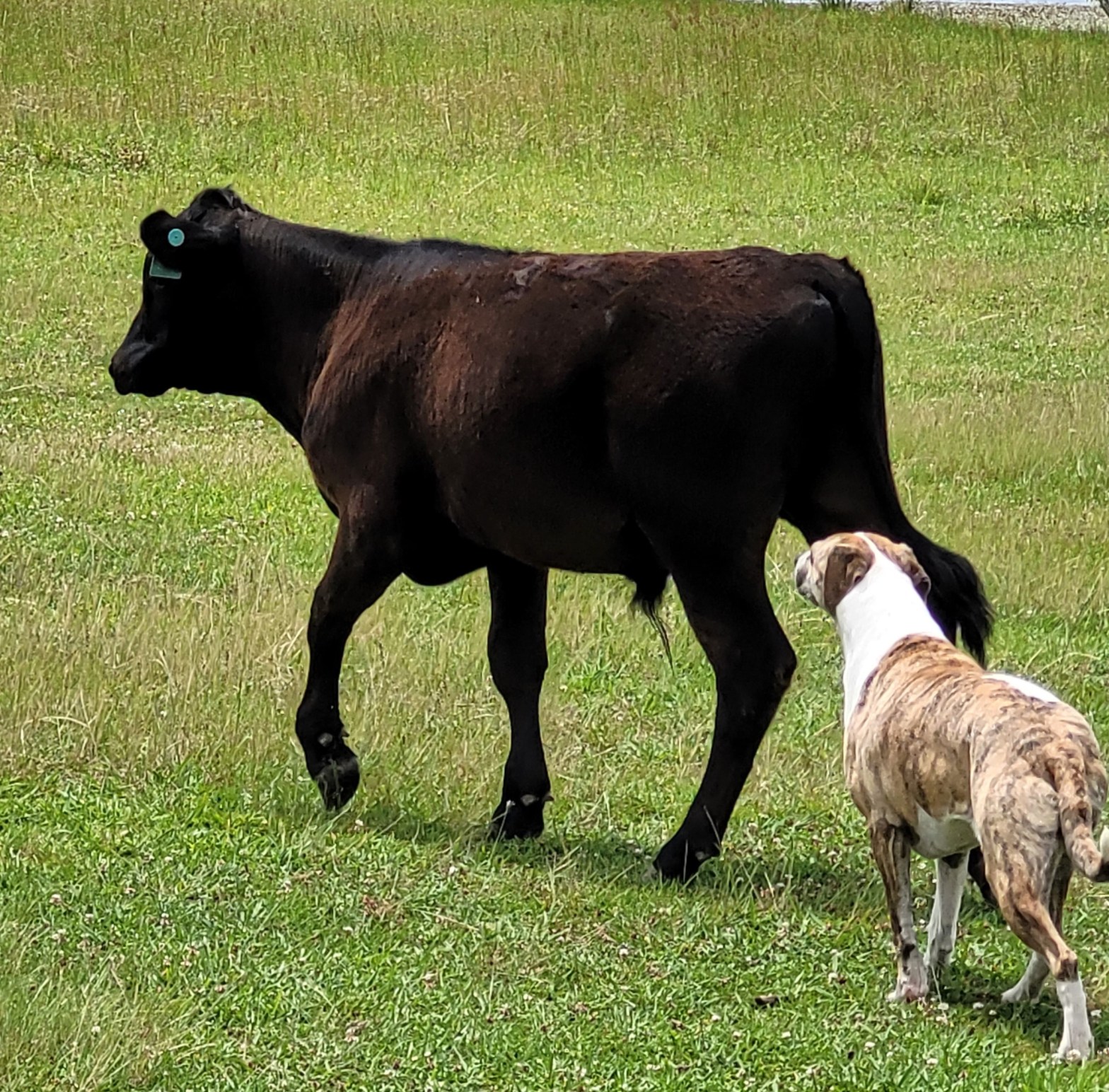
It was almost an ask for forgiveness rather than permission situation.
I have a friend from my time training at the state fire academy that has a cattle operation as a side business. He had posted some of the young steers on his farm on his social media accounts and I made the off-hand half joking comment to him that I could use one or two of those. Unexpectedly, he said I could buy one if I was serious. I maaaay have agreed before talking to my sweet loving wife. BUT it was going to take a little while to get the steer weened and ready for pickup so I had time to convince her.
This all happened around our first trip to Nashville for her two week Chronic Lyme treatment. By the time the steer was ready Delisa was on board. I had managed to sell and old truck I had and we agreed that I could use some of that money for a steer to grow out on pasture and harvest, giving us grass fed healthy meat for us to eat.
The week after we retuned from her treatment, we went to pick up our new steer, T-bone. Yes, that is his name. Joel Salatin (Polyface Farm) says animals that are for production shouldn’t be named because that forms an emotional attachment and it makes it harder for you do what you intended with the animal. While this is probably a very wise and truthful stance to take, I like the way Al Lumnah (Youtube: Lumnah Acres) does his pigs on his homestead. He names them after a food to be a constant reminder of their purpose on the farm while still giving him a name to call them so they learn to respond to calls.
The philosophy of animals on your farm only having one bad day their entire lives is definitely one to which I prescribe. For us having a familiarity and relationship with our animals helps us better serve them as care taker and provider. We may treat them as pets to some people’s eyes, and be called cruel to eat them later on. We see it as highly respecting the animal for the sacrifice it will make to give us the best nutrition possible and we owe it a great life until it is time to fulfill that end goal. Taking ownership of that animal’s life and being responsible for it is one of the most important things a meat eater can do.
T-bone’s introduction to the farm was far from uneventful. At this point we only had Peewee, the chickens, a handful of ducks and a goose. Having grown up around cows I didn’t expect any issues as I knew the fences were good and there was plenty of grass to eat. Delisa, being a horse person didn’t see anything that would go wrong on that end. Boy, were we wrong!

We arrived at the farm with T-bone on June first. We had some storms drop trees on our west fence in early May and in my haste to keep animals in, I merely cut the trees off the fences and fixed them, leaving the tops along the edge of the fence until I found time to buck them up for firewood and pile the branches. Peewee was watching us from his favorite corner close to our neighbors’ horses as we turned T-bone out. At 5 months old he wasn’t very big and having never really been away from other cows he didn’t know what to do with a nine-acre pasture to himself. He quickly found sanctuary in the downed tree tops and we thought nothing more about it.
That night we received a call from out neighbor that Peewee was in his pasture with his horses. Unbeknownst to us, horses who have never met a cow can be terrified of them, especially if they are black and pop up out of a dead tree top in the dark. Evidently, Peewee was making his way around the pasture and came by T-bone’s hiding spot and T-bone stood up and spooked Peewee. Peewee ran headlong towards his favorite corner but didn’t stop when he got there. He jumped the fence, mostly.
We hurried over to check on him, he was scratched and had minor cuts from his attempted flight but was otherwise fine. Our neighbor, graciously, allowed us to stall Peewee over night as I assisted in fixing the fence up with him to keep everyone else where they were supposed to be. The next morning, we brought Peewee back to our pasture the long way down the road and proceeded to introduce him and T-bone in a more controlled and safe manner. Once we were sure Peewee wasn’t going to attempt to leave again by any means necessary, we started doing what we should have done from the beginning.
Rookie mistake number one, not keeping new animals in a small pen to allow everyone to get acquainted safely and allow the new animal to become comfortable with you as its new care taker and provider.
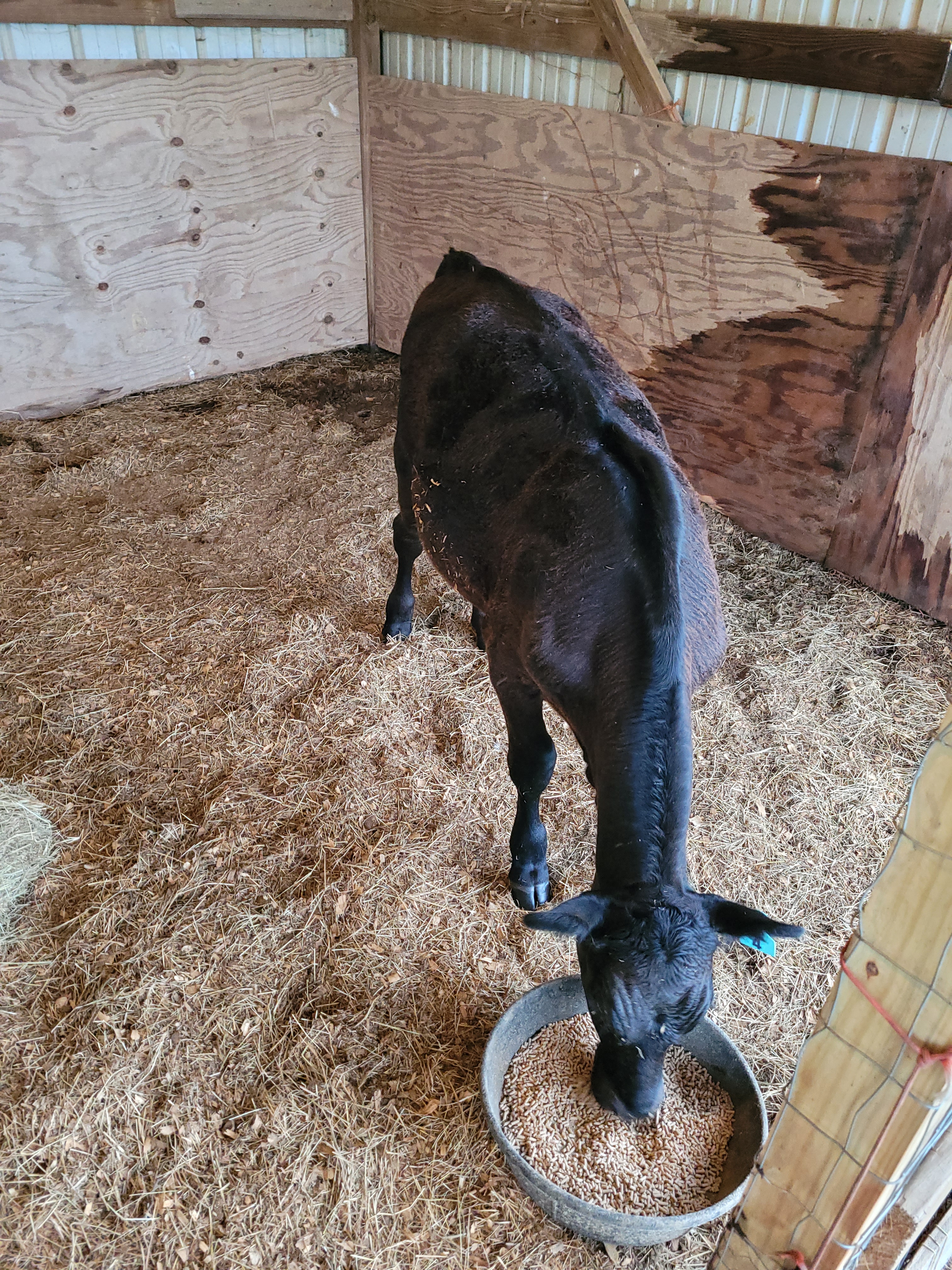
It took a while, but we were able to chase him around until he was corralled up in the barn stall. Once he was sequestered there, we took a few days feeding him and getting him used to us and associating food and head scratches with us. The food did it, he is still not a fan of head scratches. Once we had him more or less tame as we wanted him, we released him and monitored his interaction with Peewee closely. Very quickly they came to ignore each other and eat as much grass as they could.
Our over all plans for T-bone haven’t changed, but his end destination has. We have a friend who heard about what we were trying to build and do with our farm and eagerly wanted to support us since they don’t have the ability to do this their selves. So, they purchased T-bone and we are finishing him out on strictly grass and delivering him to the butcher for them. He is expected to be ready late spring or early summer.
We hope you enjoyed our adventures into the bovine territory and learned from our mistakes! Come on back for more tales from the farm and have a Sunflowery day!
 Sunflower Farms MS